
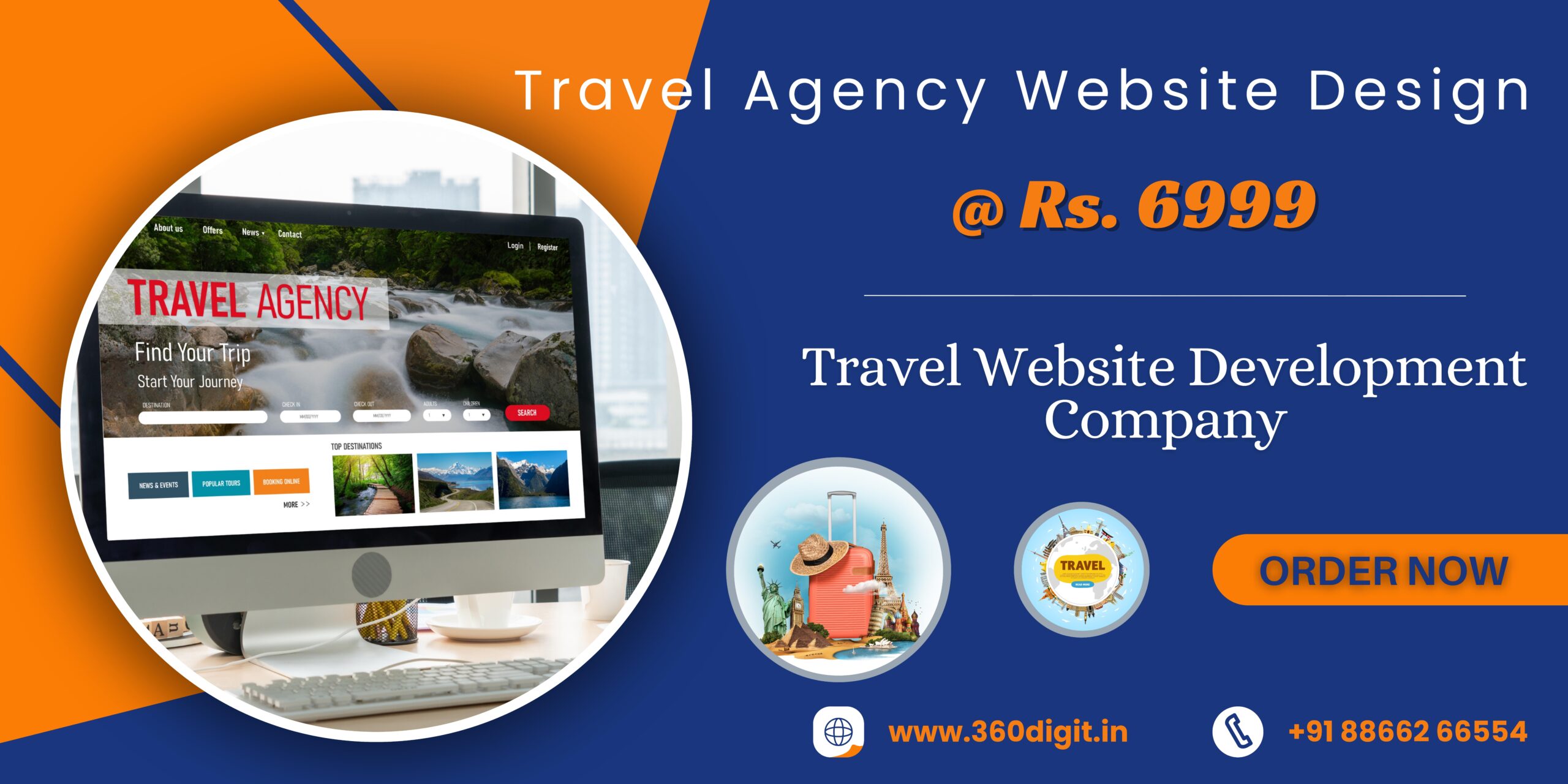

Website Design for Travel Companies, Website for Your Travel Company

In an era where wanderlust knows no bounds, a well-designed website is the passport to your travel company’s success. That helps to grow your Business & Expand in the world. Whether you’re a tour operator, travel agency, or adventure specialist, your website serves as the gateway to unforgettable experiences for your customers. In this blog post, we’ll explore the importance of effective website design for travel companies and provide insights into creating a captivating online presence that inspires and entices travelers to embark on their next adventure. Also to Grow their Business by online presence.
Visit Our Website: https://360digit.in/
Call For information: +91 8866266554
Capturing the Spirit of Adventure:
- Discuss the importance of conveying the excitement of travel through attractive visuals and involvement in storytelling.
- Highlight the role of vibrant imagery, compelling videos, and strong image content in inspiring wanderlust and igniting the desire to explore new destinations.
User-Centric Design for Best Experiences:
- Emphasize the need for user-centric design that prioritizes ease of use, intuitive navigation, and seamless booking experiences.
- Showcase the importance of clear calls-to-action (CTAs), simplified booking forms, and informative itineraries in effortlessly guiding visitors through the booking process.
Showcase Destinations and Plan of Journey:
- Explore the benefits of prominently showcasing your featured destinations and tour packages on your website. with all detailed information on pricing plans.
- Discuss the importance of providing detailed information about each destination, including highlights, activities, accommodation options, and travel logistics.
High-Quality Responsive Design for Mobile Users:
- Highlight the increasing importance of mobile responsiveness in catering to travelers who research and book trips on their smartphones and tablets.
- Showcase the benefits of responsive design in providing a consistent and enjoyable browsing experience across all devices, ensuring that travelers can access your website anytime, anywhere.
Incorporate Social Proof and Testimonials:
- Discuss the power of social proof in building trust and credibility with potential travelers.
- Showcase customer testimonials, reviews, and user-generated content to demonstrate the positive experiences of past travelers and inspire confidence in your services.
Highlight Travel Expertise and Personalized Service:
- Emphasize the importance of showcasing your travel expertise, local knowledge, and personalized service offerings on your website.
- Discuss the benefits of including profiles of your team members, destination experts, and tour guides to establish credibility and connect with potential customers personally.
Integrate Booking and Payment Solutions:
- Explore the advantages of integrating user-friendly booking and payment solutions directly into your website.
- Highlight the convenience of online booking systems, secure payment gateways, and real-time availability calendars to streamline the booking process and maximize conversions.
Optimize for Search Engines and Local Listings:
- Explain the importance of search engine optimization (SEO) in improving the visibility and discoverability of your travel website.
- Discuss the benefits of optimizing your website for relevant keywords, local search listings, and Google My Business profiles to attract organic traffic and increase bookings.
Conclusion:
A well-designed website is your ticket to success in today’s competitive travel industry. By prioritizing user experience, showcasing your destinations and expertise, and embracing responsive design and booking solutions, you can create a captivating online presence that inspires travelers to embark on unforgettable journeys with your company. 360digit.in Company helps to Grow your Travel Business Online & take it to the new height of success.
FAQS:
1. What is website design for a travel company?
Website design for a travel company involves creating an online platform that showcases the company’s services, destinations, and offerings in an attractive and user-friendly manner.
2. Why is website design important for a travel company?
Website design is crucial for a travel company as it serves as the digital face of the business, influencing potential customers’ first impressions and their decision to engage with the company.
3. What elements should be included in a travel company’s website design?
A travel company’s website design should include stunning imagery of destinations, easy navigation, clear calls-to-action for booking or inquiries, and informative content about services and destinations.
4. How can I ensure my travel company’s website design is user-friendly?
To ensure user-friendliness, prioritize intuitive navigation, mobile responsiveness, fast loading times, and clear communication of key information throughout the website.
5. What role does branding play in travel website design?
Branding is essential in travel website design as it helps convey the travel company’s unique identity and value proposition, creating a memorable and cohesive experience for visitors.
6. Should my travel company’s website include booking functionality?
Integrating booking functionality into your travel company’s website can streamline the booking process for customers, enhancing convenience and potentially increasing conversion rates.
7. How can I optimize my travel company’s website for search engines?
To optimize your website for search engines, focus on relevant keywords, high-quality content, meta tags, image optimization, mobile-friendliness, and obtaining backlinks from reputable sources.
8. What is responsive design, and why is it important for travel websites?
Responsive design ensures that a website adapts seamlessly to various devices and screen sizes, providing an optimal viewing experience for users regardless of whether they’re accessing the site from a desktop, tablet, or smartphone.
9. What security measures should I implement on my travel company’s website?
Implement SSL encryption, secure payment gateways, regular software updates, strong password policies, and measures to protect against malware and hacking to safeguard sensitive customer information.
10. How can I integrate social media into my travel company’s website design?
Integrate social media buttons, shareable content, user-generated content, and social media feeds to encourage engagement, foster community, and amplify your brand’s reach on platforms like Facebook, Instagram, and Twitter.
11. What design trends in the travel industry should I consider?
Design trends in the travel industry include immersive imagery and videos, minimalist layouts, bold typography, interactive maps, personalized experiences, and storytelling through visual content.
12. Should my travel company’s website have a blog?
Having a blog on your travel company’s website can be beneficial for SEO, establishing thought leadership, sharing travel tips and insights, inspiring potential customers, and driving organic traffic.
13. How can I ensure my travel website is accessible to people with disabilities?
Ensure your website complies with accessibility standards such as WCAG (Web Content Accessibility Guidelines) by incorporating features like alt text for images, keyboard navigation, color contrast, and compatibility with screen readers.
14. What metrics should I track to measure the success of my travel company’s website?
Track metrics such as website traffic, bounce rate, conversion rate, average session duration, click-through rate, return on investment (ROI) from marketing efforts, and customer feedback to gauge the effectiveness of your website.
15. Should I invest in professional photography for my travel website?
Investing in professional photography can significantly enhance the visual appeal and credibility of your travel website, showcasing destinations, accommodations, and experiences in the best possible light.
16. How can I make my travel website stand out from competitors?
To differentiate your travel website, focus on offering unique experiences, personalized recommendations, exceptional customer service, engaging content, and seamless booking processes tailored to your target audience’s needs.
17. What are some common pitfalls to avoid in travel website design?
Common pitfalls to avoid include cluttered layouts, slow loading times, outdated content, lack of mobile optimization, confusing navigation, poor usability, and insufficient security measures.
18. Should I offer multilingual support on my travel website?
Offering multilingual support can enhance the accessibility and appeal of your travel website to international travelers, facilitating communication and engagement with a diverse audience.
19. How often should I update content on my travel website?
Aim to regularly update content on your travel website to keep it fresh, relevant, and engaging for visitors, whether it’s through blog posts, destination guides, special offers, or seasonal promotions.
20. Can I incorporate user-generated content into my travel website?
Yes, incorporating user-generated content such as reviews, testimonials, photos, and videos can add authenticity, social proof, and credibility to your travel website, encouraging trust and engagement from potential customers.
21. How can I showcase customer testimonials on my travel website?
You can showcase customer testimonials on your travel website by creating a dedicated testimonials page, incorporating testimonials throughout your website’s content, and utilizing widgets or plugins that display rotating testimonials.
22. Is it important to have a mobile app in addition to a website for my travel company?
Having a mobile app can complement your travel website by providing additional functionality and convenience for users, such as offline access to travel information, push notifications for updates and promotions, and integration with native device features like GPS.
23. What should I consider when designing the booking process on my travel website?
When designing the booking process, prioritize simplicity, transparency, and security. Provide clear instructions, minimize form fields, offer multiple payment options, display pricing upfront, and reassure customers with confirmation emails and booking details.
24. How can I incorporate interactive maps into my travel website?
You can incorporate interactive maps into your travel website using tools like Google Maps API or Mapbox. Highlight destinations, points of interest, accommodations, and activities, allowing users to explore and plan their trips visually.
25. What role does storytelling play in travel website design?
Storytelling is essential in travel website design as it helps evoke emotions, inspire wanderlust, and create a connection with your audience. Use compelling narratives, authentic experiences, and captivating visuals to immerse visitors in the travel journey.
26. Should I include a chatbot on my travel website?
Including a chatbot can enhance customer support and engagement on your travel website by providing instant responses to common inquiries, assisting with bookings, and offering personalized recommendations based on user preferences.
27. How can I integrate video content into my travel website?
You can integrate video content into your travel website by embedding videos from platforms like YouTube or Vimeo, creating destination guides, virtual tours, customer testimonials, and promotional videos that showcase the unique experiences your travel company offers.
28. What strategies can I use to encourage repeat visits to my travel website?
Engage with your audience through email newsletters and social media, provide exclusive deals and discounts for returning customers, and offer valuable content such as travel guides, blog posts, and insider tips.
29. How can I leverage email marketing to drive traffic to my travel website?
Leverage email marketing by building an email list of subscribers interested in travel, sending personalized and targeted email campaigns promoting your latest offers, blog posts, and travel experiences, and incentivizing subscribers with exclusive discounts and deals.
30. What resources are available for optimizing the performance of my travel website?
There are various resources available for optimizing your travel website’s performance, including website analytics tools like Google Analytics, website optimization plugins, online forums and communities for web developers, and professional web development services specializing in travel industry needs.
Leave a Comment